

If you are a business owner, you already know this pain: you post on Instagram, you run a few ads, you ask friends to share… and still customers don’t come daily. Meanwhile, your competitor shows up on Google for “near me” searches and gets calls without spending money every day.
SEO for business in 2026 is still the most profitable long-term way to get leads, even after AI Overviews and new Google changes. The winners are not “tech people”. The winners are the businesses that do the correct basics + correct local steps + correct trust signals.
If your website is already live, you can often see indexing + ranking movement in weeks, and steady leads in 3–6 months when you follow the full system.
The “2026 Truth” About SEO for Business
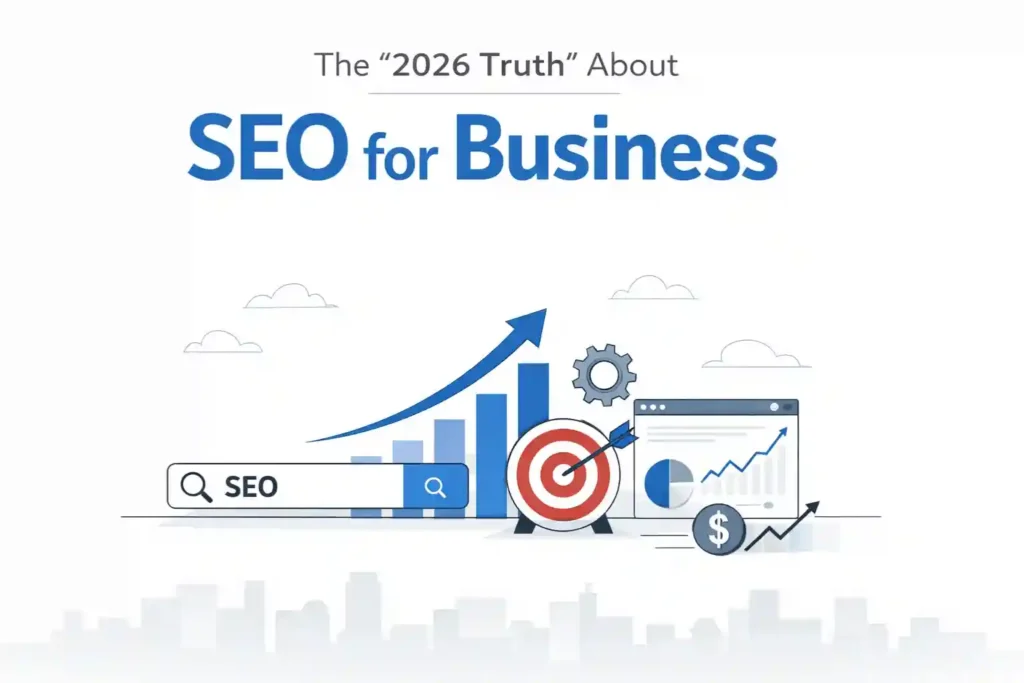
SEO for business in 2026 is simple: Google ranks the business that looks most helpful + most trustworthy + easiest to use, and local customers choose the business that looks most real (reviews, photos, clear services, quick contact).
If you want the best SEO for small business, stop chasing “tricks”. Build a strong base, then grow authority step-by-step.
What You’ll Read in This Blog
- SEO terms you must know
- Step-by-Step SEO Strategy for Business
- Tools that help in SEO
- Common SEO Mistakes Businesses Make
- FAQ’s
- How Outranko Can Help in seo for your business
SEO terms you must know
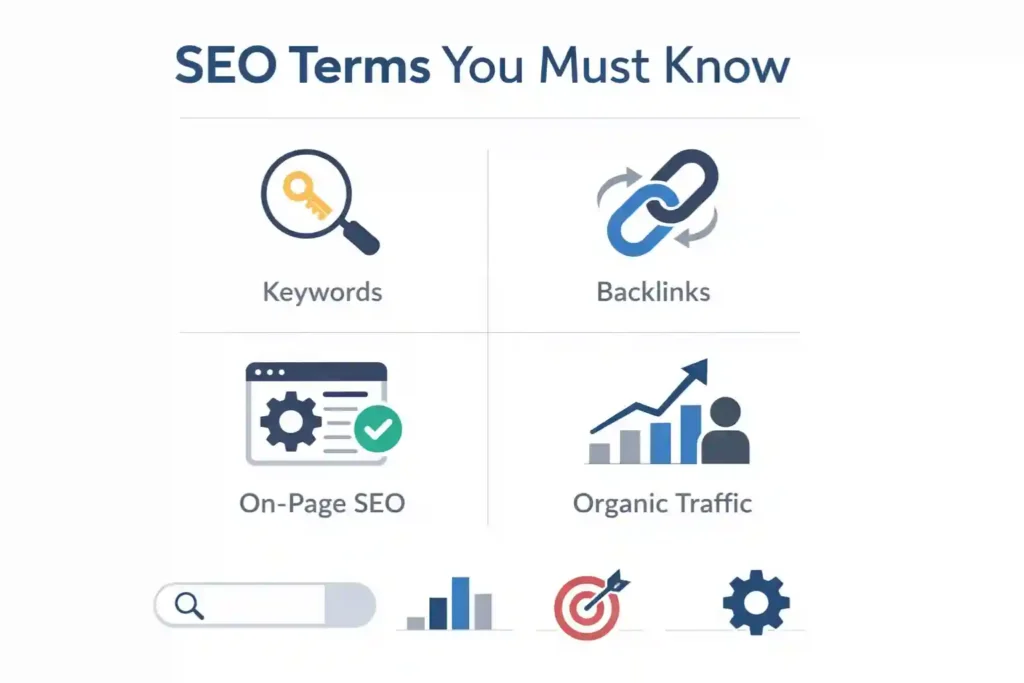
Before the strategy, you must understand these words. If you understand these, SEO help for small business becomes easy.
1) Keyword = the exact sentence your customer types
Example:
- “dentist in vaishali nagar”
- “best cafe near me”
- “seo for my business”
If you don’t use the same words on your website, Google doesn’t know you match.
2) Search intent = what the customer actually wants
“Price”, “near me”, “book”, “call”, “best”, “open now” = ready to buy.
This is where SEO increases sales and SEO generates leads.
3) On-page SEO = what you write on your pages
This includes headings, service details, FAQs, internal links, and clear contact buttons.
4) Technical SEO = your website health
If Google cannot read your pages properly, you won’t rank even if your content is good. Google’s own guidance focuses on being crawlable, understandable, and helpful.
5) Local SEO = the “Map results” + local trust
In local search, reviews are a big decision factor. BrightLocal’s latest survey shows 97% of consumers read reviews for local businesses.
6) AI Overviews = fewer clicks, but more importance of trust
In 2026, AI summaries can reduce clicks for many informational searches, so you must target high-intent queries and build a brand people trust. Multiple studies show clicks drop when AI summaries appear.
The Exact Step-by-Step SEO Strategy for Business Websites (2026)
Below is the guide to business SEO you can follow like a checklist.
Step 1: Choose ONE clear goal (or your SEO becomes useless)
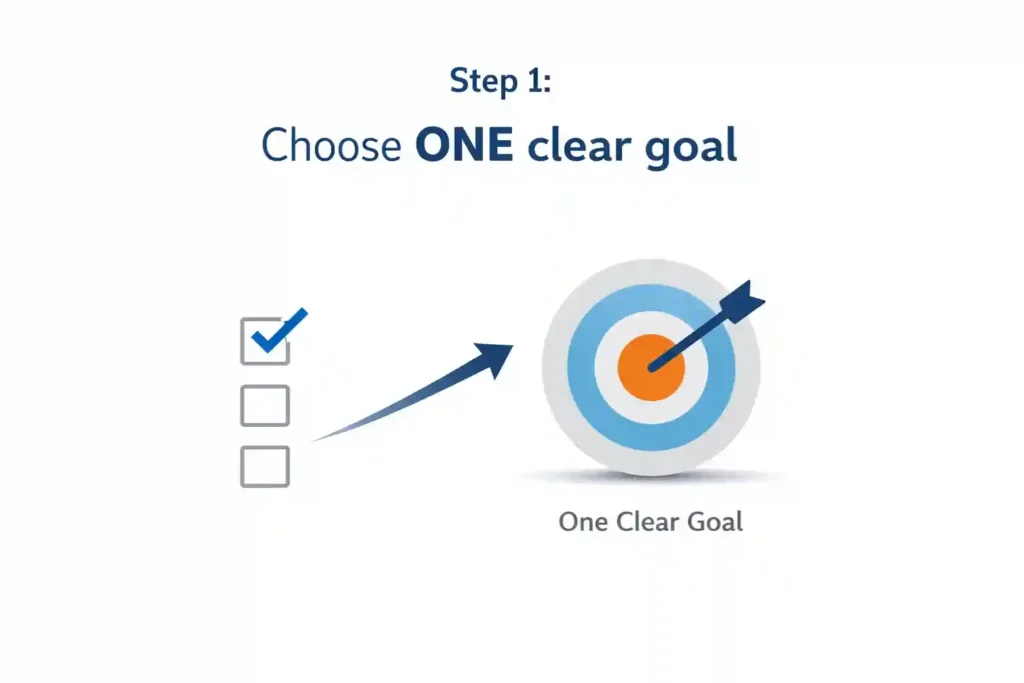
Pick your main goal:
- More calls
- More WhatsApp messages
- More store visits
- More form leads
- More bookings
Why this matters: SEO for business is not “traffic”. It is profit.
Action:
- Write your top 3 services (example: “hair transplant”, “PRP”, “beard transplant”)
- Write your top 3 areas (example: “Malviya Nagar”, “Vaishali Nagar”, “Mansarovar”)
This becomes your SEO base.
Step 2: Set up tracking in 30 minutes (most businesses skip this)
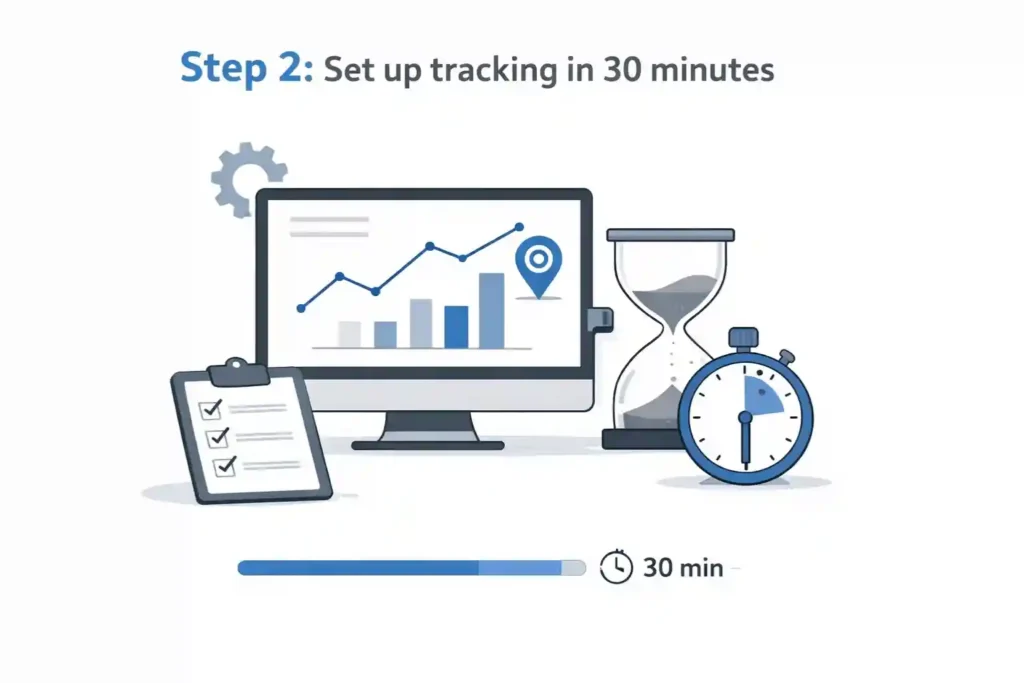
If you don’t track, you can’t measure the ROI of SEO for businesses.
Must-have tools (free):
- Google Search Console (to see keywords, clicks, indexing)
- Google Analytics (GA4) (to see traffic and pages)
- A simple call/WhatsApp tracking method (even a separate WhatsApp link)
Google’s own SEO guidance strongly supports getting your basics right (crawl + index + understand).
Step 3: Build your “Money Keyword List” (not a random keyword list)
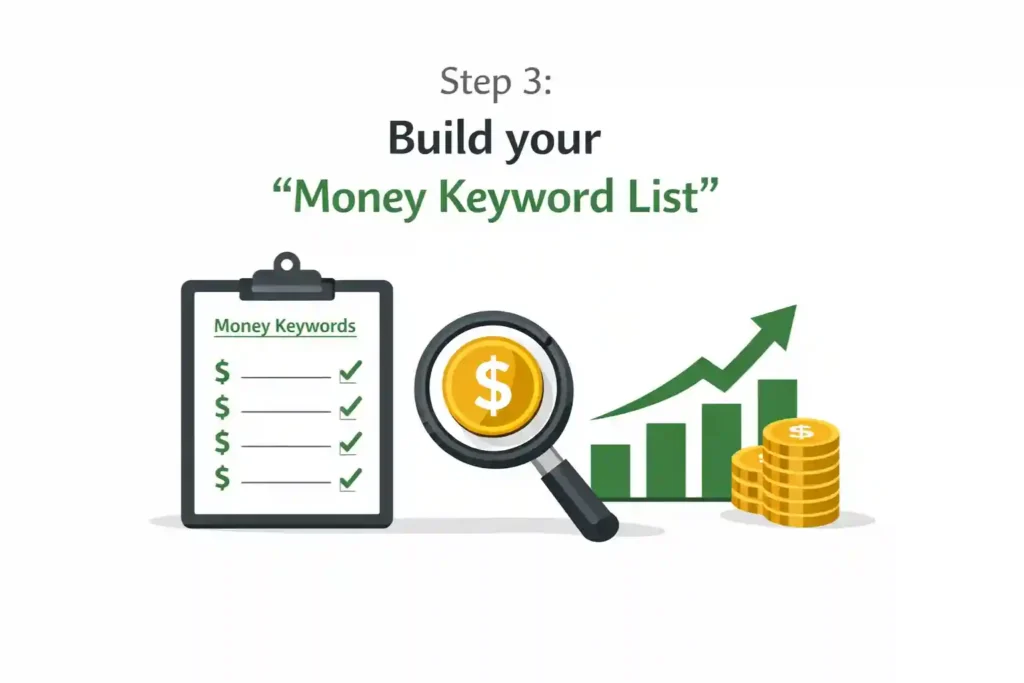
Most people do SEO for small businesses wrongly because they choose “blog keywords” only.
You need 3 keyword buckets:
Bucket A: Service + City (Money)
- “Interior designer in Jaipur”
- “seo companies for small business”
- “Ca exam coaching in jaipur”
- “how to do SEO for a business website”
Bucket B: Service + Near Me (Calls)
- “best veg restaurant near me”
- “Pcm coaching near me”
- “Orthopadic doctor near me”
Bucket C: Problem + Solution (Trust)
- “how SEO helps a business grow”
- “cost of hair transplant”
- “how to choose a dentist”
- “difference between SEO and digital marketing”
Action:
- Make a sheet with 30–50 keywords.
- Mark each keyword as: Calls / Leads / Trust.
Step 4: Create the “Perfect Website Structure” (this is where rankings start)
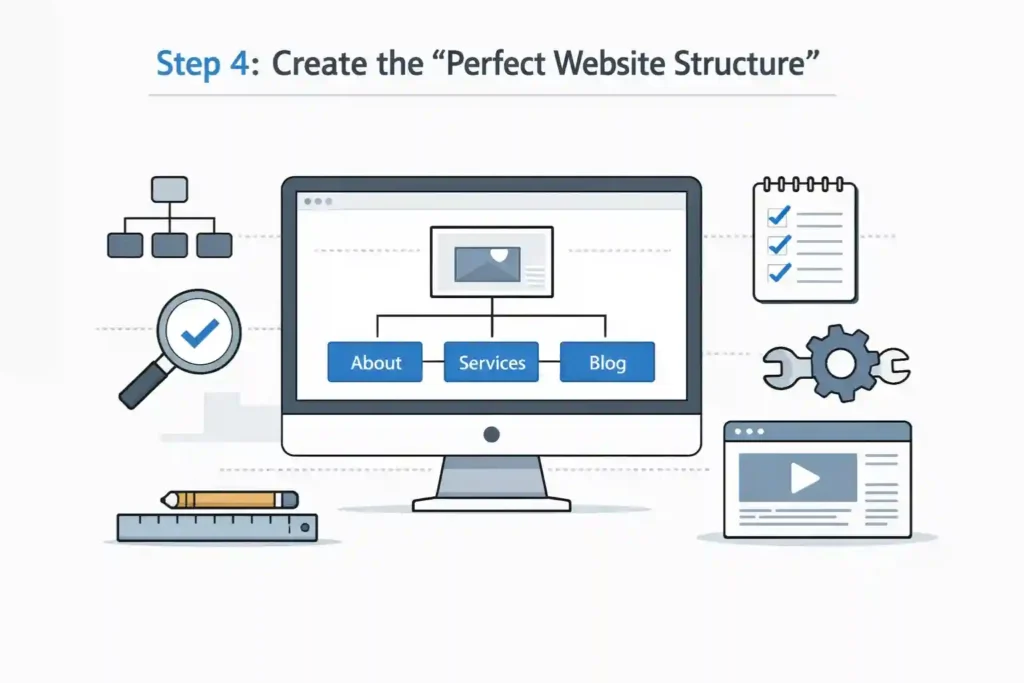
If your website structure is wrong, your SEO for business will stay weak.
Minimum pages a small business must have:
- Home (clear service + trust + CTA)
- About (real story, team, photos)
- Service pages (1 page per service)
- Location page (if you serve multiple areas, do it properly)
- Contact (map, call button, WhatsApp)
- Reviews/Testimonials (real and detailed)
- Blog (for trust + FAQs + AI Overviews visibility)
Simple rule:
One service = one strong page.
Do not mix 10 services on one thin page.
Step 5: On-Page SEO for Business Websites (the exact page format)
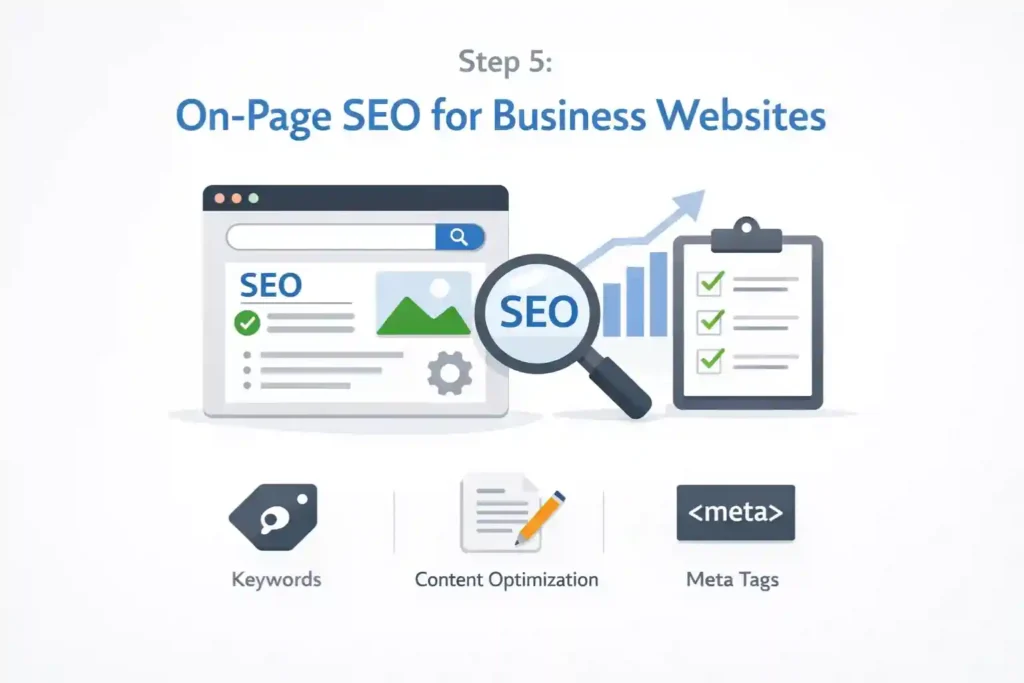
This is the most important part of how to do SEO for a business website.
Use this format on every service page:
A) Title (Google title)
Example:
“SEO for Business in Jaipur | Outranko – Leads, Calls, Growth”
B) H1
Same meaning as title, simple.
C) First 150 words
Explain:
- Who you help
- What you do
- What result they get
D) Services included (bullet list)
Easy to read.
E) Pricing or “starting from” (if possible)
Transparent pages convert better.
F) Proof
- Case study
- Before/after screenshot
- Client logos
- Reviews
G) FAQ section
This helps “People Also Ask” type searches.
Step 6: Technical SEO for Business Sites (simple but powerful)
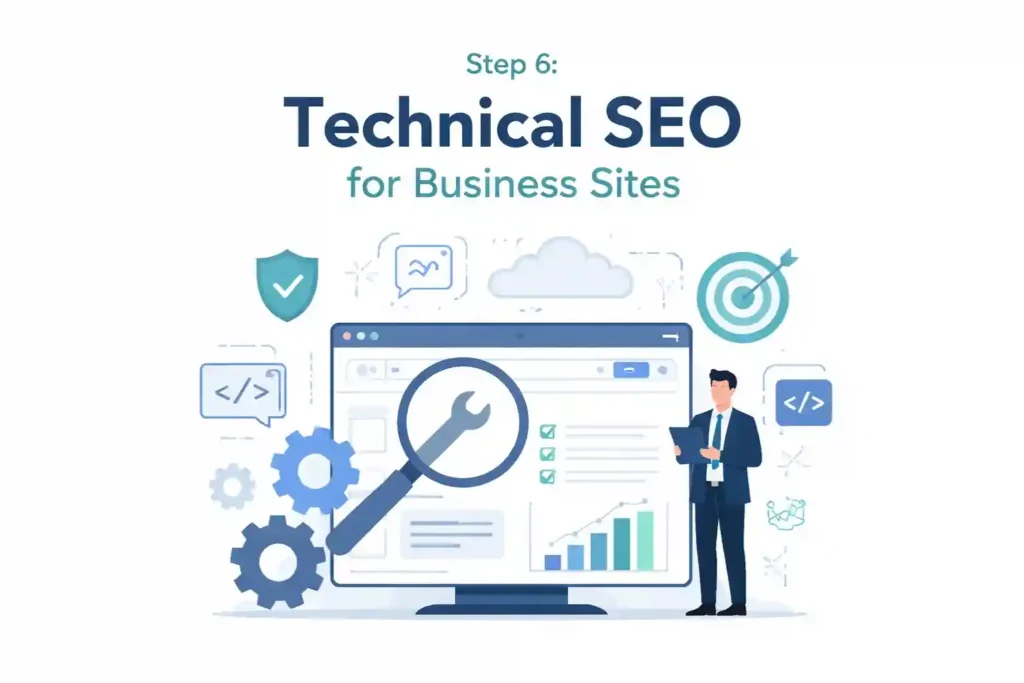
Technical SEO sounds scary, but it’s mostly basic hygiene.
2026 technical checklist:
- Your site must be mobile-friendly
- Pages must load fast
- No broken pages (404)
- Sitemap submitted in Search Console
- Important pages not blocked by robots.txt
- HTTPS enabled
- Clean URLs (example: /seo-for-business-jaipur/)
If your site is messy, Google wastes time and customers leave.
You can check your website health by pasing your URL on
Step 7: Local SEO for Business Explained (THIS brings calls)
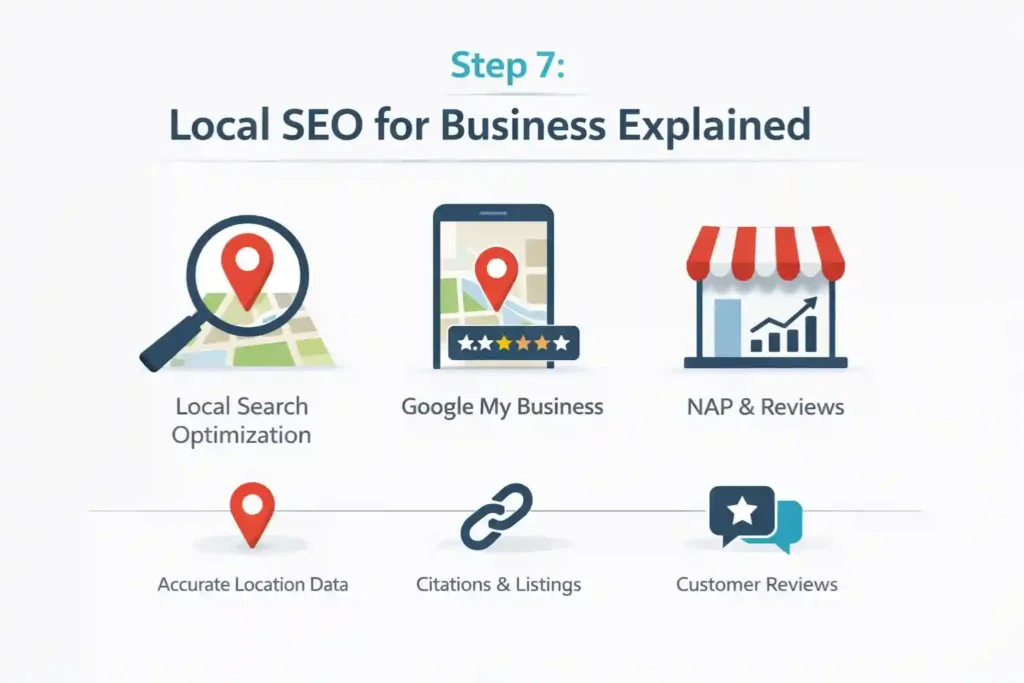
If you want fast results, local SEO is the shortcut for many small businesses.
Your local SEO must include:
- Google Business Profile fully filled
- Correct category (primary + secondary)
- Service areas listed
- Photos every week (real, not stock)
- Posts (offers, updates)
- Q&A (ask and answer your own common questions)
- Reviews strategy
Why reviews matter: BrightLocal reports 97% of consumers read reviews for local businesses.
Simple review script (WhatsApp):
“Hi [Name], thanks for visiting. Can you write a 1-line review about your experience? It helps small businesses a lot.”
Step 8: Off-Page SEO for Companies (without doing dangerous stuff)
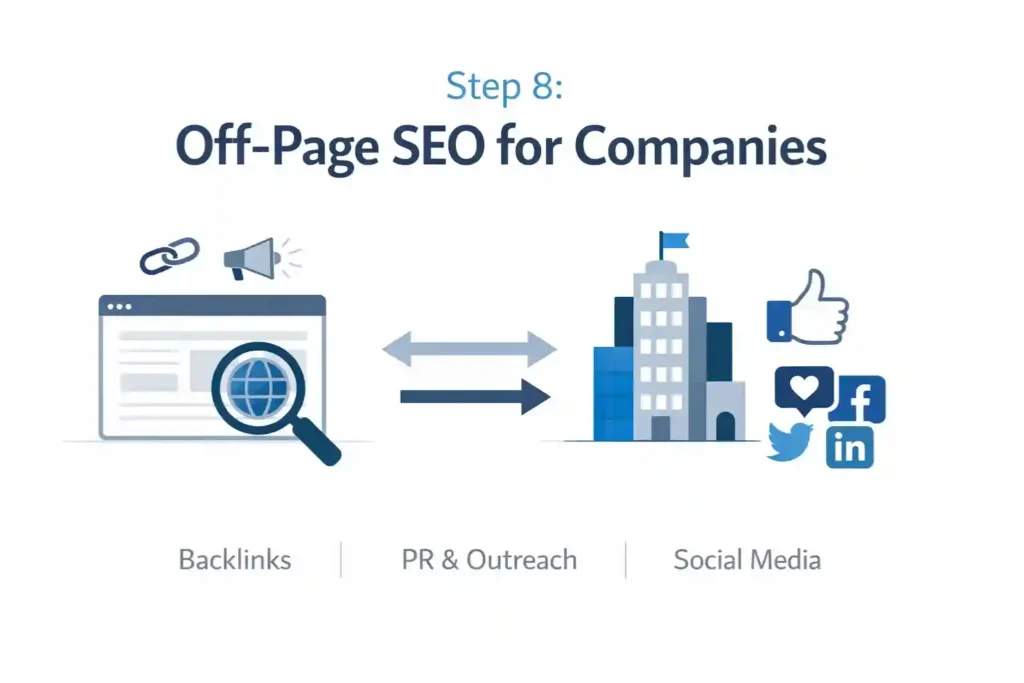
Off-page SEO means “signals outside your website” that build trust.
✅ Safe off-page steps for SEO for small businesses:
- Local citations (same Name, Address, Phone everywhere)
- Industry directories (real ones)
- Local PR (local news features, partnerships)
- Guest posts ONLY on relevant sites (not spam)
❌ Avoid buying 1,000 backlinks. That is a common SEO mistake businesses make.
Step 9: Win in the AI Overviews era (2026 reality)
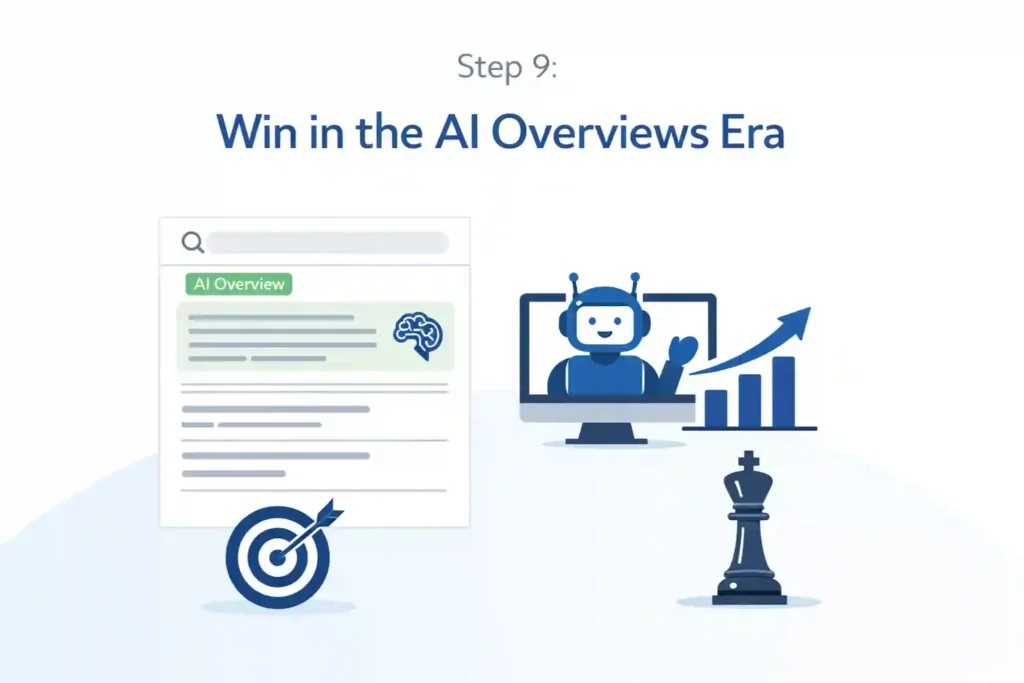
AI Overviews can reduce clicks on many informational searches, so your content must do two things:
- Target high-intent searches (services, pricing, booking, near me)
- Write clean answers for FAQs so Google can use your content in AI features
Google has specific guidance for site owners about AI features and visibility controls, and how to approach inclusion.
Also, multiple reports show CTR and clicks often drop when AI summaries appear.
✅ Practical action:
Add a “Quick Answer” box under each service page intro:
- 2–3 lines
- simple words
- direct answer
- then details
Step 10: Improve CTR (because ranking alone is not enough)
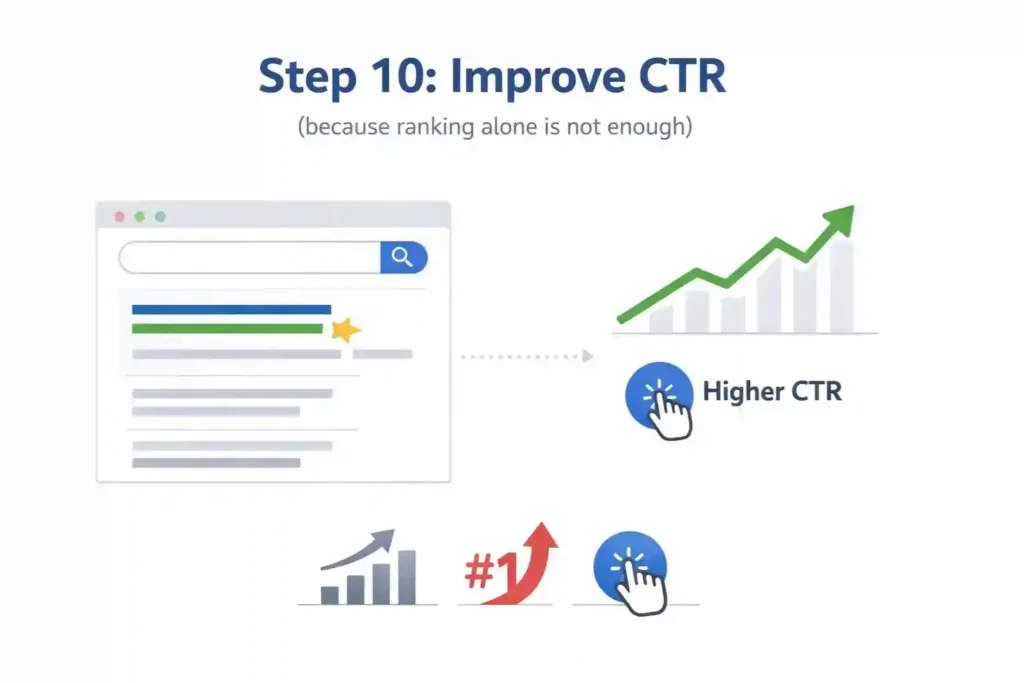
Even if you rank, you need clicks.
A large CTR study found the #1 result gets 27.6% of all clicks (average).
Here’s a simple table you can remember:
| Google Position | Typical Click Share (CTR) |
| #1 | ~27.6% |
| #2 | ~15.8% |
| #3 | ~11.0% |
| #10 | much lower |
Source: Backlinko CTR analysis.
✅ CTR upgrade checklist:
- Add numbers (“2026”, “7 steps”, “₹ pricing”)
- Add strong benefit (“calls”, “leads”, “bookings”)
- Match intent (“near me”, “cost”, “best”)
Tools you need to do SEO for your business
Free tools (enough for most small businesses)
- Google Search Console
- Google Analytics (GA4)
- Google Business Profile
- Google PageSpeed Insights (for speed checks)
Paid tools (faster research and audits)
- Ahrefs / Semrush (keywords + backlinks)
- Screaming Frog (site audit)
- BrightLocal (local tracking, citations)
Common SEO Mistakes Businesses Make (Avoid These)
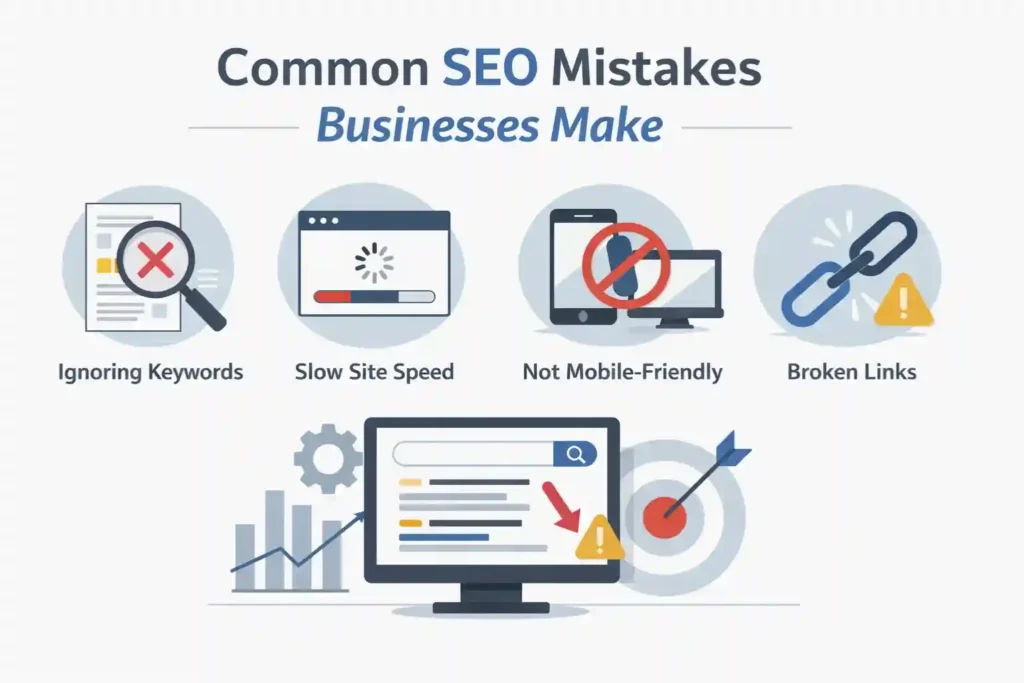
- Doing SEO for business without tracking (no Search Console)
- One page for all services (thin pages don’t rank)
- Copy-paste content from other sites (Google sees it)
- Ignoring local SEO (maps + reviews are money)
- Buying cheap backlinks (danger)
- Posting blogs that don’t match buyer intent
- No proof (no reviews, no photos, no real business signals)
- Not updating old pages (rankings decay)
Questions that People with same interest asked
1) What is SEO for business?
SEO for business means improving your website and local presence so customers find you on Google, trust you, and contact you.
2) How SEO helps a business grow?
SEO helps a business grow by bringing regular customers from Google without paying for every click, which improves long-term profit and stability.
3) How long does SEO take for business?
Many people see early movement in 3–6 months, but it depends on competition, website quality, and consistency.
4) What is the cost of SEO for businesses?
Cost depends on city competition, number of services, and how fast you want growth. Local SEO for a small area costs less than national SEO. (A good agency will explain the scope clearly.)
5) What is the difference between SEO and digital marketing?
SEO is one part of digital marketing. Digital marketing also includes ads, social media, email, and more. SEO focuses mainly on Google rankings and search visibility.
6) How to choose an SEO agency?
Choose an agency that shows:
- Clear plan and timeline
- Real case studies
- Clean reporting
- No “guaranteed #1 in 7 days” fake promises
(Those promises usually lead to spam.)
7) What are the benefits of SEO for companies?
Benefits of SEO for companies include more leads, better brand trust, lower long-term cost per lead, and stronger local visibility.
8) Does AI Overviews kill SEO?
No. But it changes SEO. Many studies show clicks can drop on informational searches when AI summaries appear, so businesses must focus more on high-intent keywords + trust + local SEO.
How Outranko Can Help
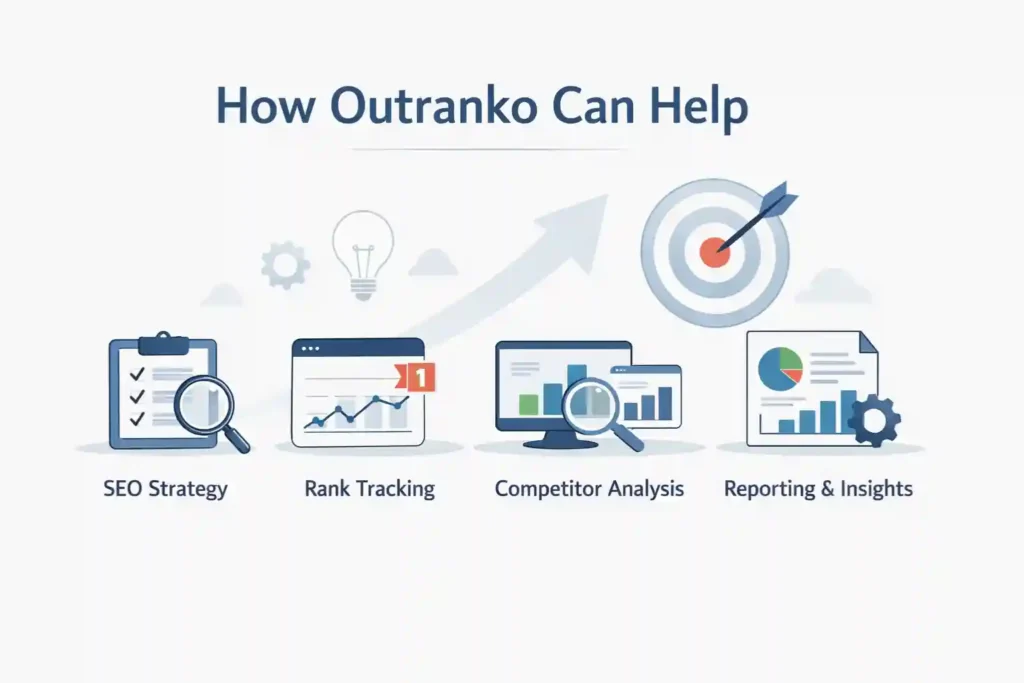
Outranko helps you with SEO for business in a simple, business-first way:
- Full SEO checklist for business owners (done-for-you)
- Keyword plan focused on calls and leads, not useless traffic
- Service pages that convert (clear offers + proof + strong CTA)
- Local SEO setup: Google Business Profile + reviews + map growth
- Technical SEO cleanup: speed, indexing, errors, structure
- Monthly reporting you can understand (no confusing English)
If you want SEO for small businesses that feels simple and works like a system, Outranko builds it step-by-step

The emphasis on local SEO and trust signals is spot on! I think many businesses underestimate how crucial it is to optimize for ‘near me’ searches. Being easily found in local search can really make a difference, especially for service-based businesses.
It’s refreshing to see a strategy-focused take on SEO that emphasizes the fundamentals—local steps and trust signals really do separate the good strategies from the noise. I’ve noticed that even with all the AI changes, businesses that focus on solid, user-focused SEO still outperform those chasing quick wins. This approach feels sustainable and realistic for small to mid-sized businesses.