


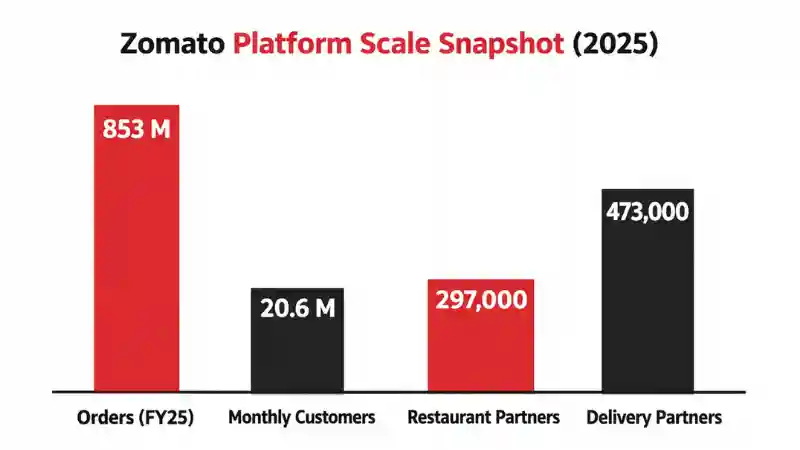
In FY25 alone, 853 million orders were placed on the Zomato platform, with 20.6 million average monthly transacting customers, 297,000 average monthly active restaurant partners, and 473,000 average monthly active delivery partners. That scale did not come just from “posting on social media.” It came from building a system that makes Learning Zomato Case Study even more important.
Zomato’s marketing strategy works because it does not behave like a brand that is begging for attention. It behaves like a product people already use, and then makes that product more visible, more relatable, and more habit-forming. That is the part most businesses miss. They try to market a weak experience.
It markets a sharp experience. Zomato’s own leadership has said improvements in geo-location, support automation, and other behind-the-scenes systems helped reduce drop-location errors by more than 30%, cut in-app query solution time by about 35%, and a 20% reduction in cancellations/rejections and a roughly 20% reduction in orders that requires support in food delivery over one year. That is not cosmetic marketing. That is conversion marketing.
What Zomato is really selling
Zomato is not just selling food delivery. It is selling:
- less decision stress
- less waiting stress
- more trust
- more habit
- more convenience
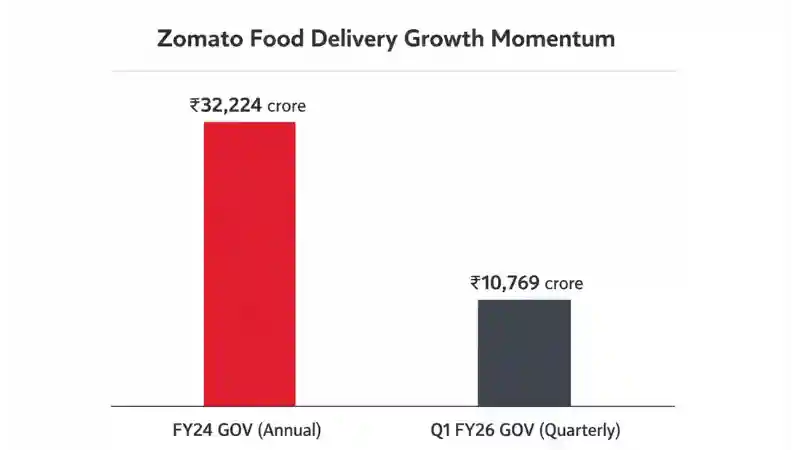
That matters because when a brand reduces stress, it increases usage. In FY24, Zomato’s food delivery GOV grew 23% YoY to ₹32,224 crore. In Q1 FY26, food delivery GOV still grew 16% YoY to ₹10,769 crore, even after the business had already become large. That tells you something very important: this is not only ad-led growth. It is experience-led growth backed by smart distribution.
1. Zomato grows because it makes repeat use easy
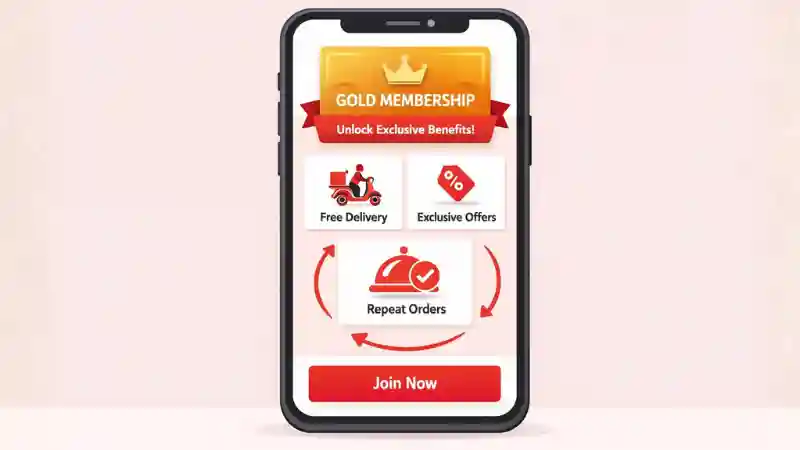
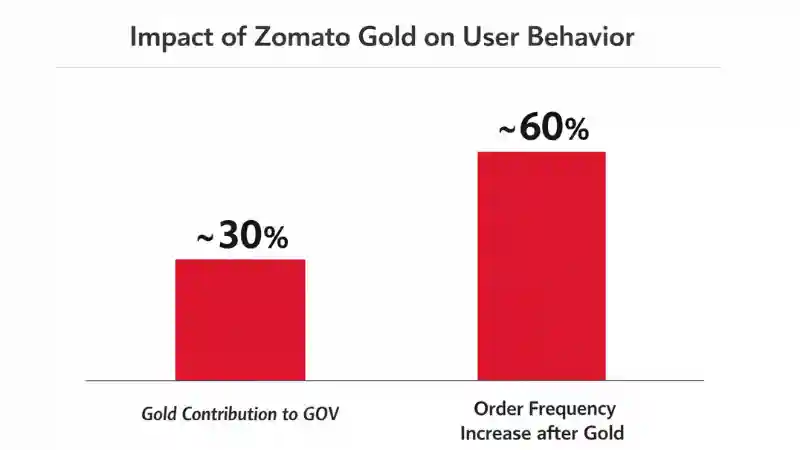
A lot of businesses obsess over getting new customers. Zomato also works on getting the same user to come back more often. In one earnings update, the company said that orders from Zomato Gold members with free delivery benefits made up about 30% of total GOV in March 2023, and that order frequency for those users increased by roughly 60% after becoming members. That is a huge lesson for local brands: do not just sell once. Give people a reason to return faster and more often.
What your business can copy:
Create a repeat-use reason. It could be a membership, priority service, monthly maintenance plan, free consultation follow-up, or a loyalty bonus. Most local businesses still market one-time sales. Zomato markets habit.
Zomato used:
1. SEO for Business very smartly.
2. Social Media Marketing for there business.
3. PPC Marketing to get faster attention.
4. Digital Marketing to get visible to their customers as they are all online.
2. Zomato’s humor works because it is built on timing, not randomness
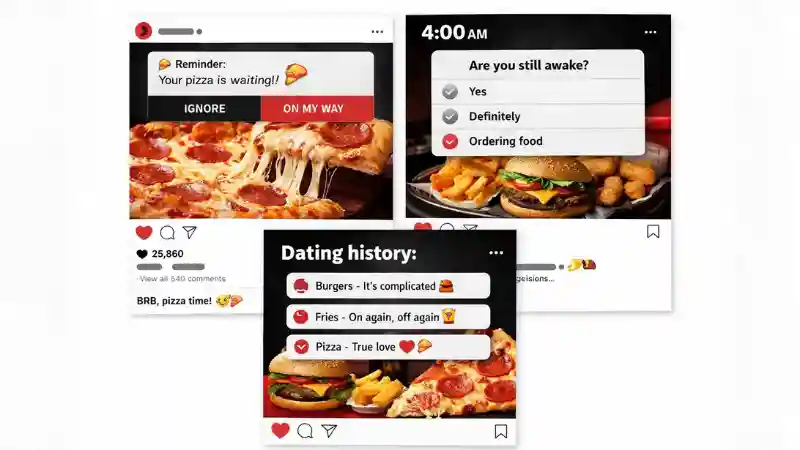
Many people say, “Zomato is funny on social media.” That is too shallow. The smarter point is this: Zomato’s humor works because it appears at the right time, in the right mood, for the right audience. The brand stays close to food moments, internet moments, local moments, and impulse moments. Other write-ups on Zomato’s strategy repeatedly point to humor, local language, geo-personalized nudges, and real-time content as key parts of how it keeps staying culturally relevant.
What your business can copy:
Do not try to be funny every day. Try to be relevant. A Jaipur real-estate brand, clinic, salon, coaching center, or digital agency can use local festivals, weather, exam season, wedding season, or monsoon pain points to become timely.
3. Zomato wins because supply growth supports marketing growth
This is one of the least discussed but most important parts of the Zomato marketing strategy. Marketing works better when users have more choice. In FY25, the average monthly active restaurant partner base on the platform grew to 297,000, up from 247,000 in FY24. Earlier management commentary also said the monthly active restaurant base was growing 20%+ YoY and that this was a key driver because the platform was still underserved from a supply standpoint. More supply means more relevant options, better search fit, and more order conversion.
What your business can copy:
Before spending more on ads, ask: is my offer broad enough, clear enough, and locally relevant enough? Many Jaipur businesses want more leads while offering weak pages, weak categories, weak service descriptions, or thin city content.
4. Zomato invests in invisible trust, and that is why visible marketing works
This is where most people learn the wrong lesson from big brands. They copy ads and captions, but they ignore trust systems. Zomato’s internal product and ops work improved customer experience in ways users may never see directly, but those changes compound. The company specifically linked improvements in support, location accuracy, cancellations, and support-required orders to future growth. When the base experience becomes smoother, every campaign performs better.
What your business can copy:
Fix what users complain about before you run more marketing:
- weak response time
- poor landing pages
- confusing pricing
- low review trust
- weak Google Business Profile
- broken enquiry flow
That is exactly where many local digital marketing campaigns fail.
5. Zomato uses scale data to sharpen, not to show off
In FY25, Zomato handled 853 million orders. That number is not interesting just because it is big. It is interesting because more orders mean more user behavior data, better prediction, better personalization, and better retention opportunities. Zomato also said in a company overview that food delivery GOV in Q1 FY26 rose to ₹10,769 crore, while food delivery margins stayed strong at 4.2% adjusted EBITDA as a percentage of GOV. This shows a mature marketing machine: growth with improving economics is much more powerful than growth that only comes from discounting.
What your business can copy:
Track these 5 numbers every month:
- enquiries
- qualified leads
- lead source
- close rate
- repeat business
If you are not tracking those, you are not really doing marketing. You are just doing activity.
6. Zomato understands that convenience is a marketing message
A lot of brands think convenience is only an operations point. Zomato treats convenience as a growth engine. Management has openly said that when delivery time dropped from 45+ minutes to around 30 minutes in earlier phases of the model, demand expanded meaningfully. That is a powerful lesson: speed is not just service quality. Speed is positioning.
What your business can copy:
Market what saves users time:
- faster callback
- faster delivery
- faster consultation booking
- faster website loading
- faster quote turnaround
Convenience converts.
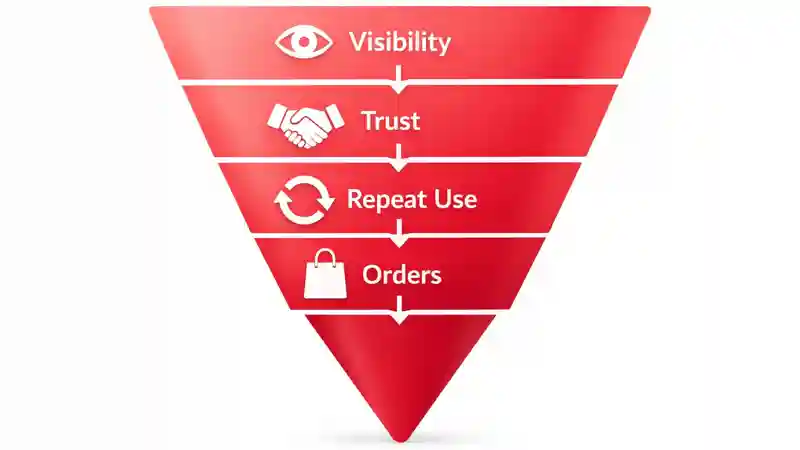
7. Zomato’s real marketing advantage is that it thinks like a system, not a channel
Most small businesses split their thinking like this:
- Instagram for content
- Google Ads for leads
- website for information
Zomato does not think like that. Its product, support, UX, delivery network, membership model, pricing, offers, and brand tone all work together. That is why its marketing feels bigger than “social media.” Even the company’s environmental and delivery-partner communications show how much system design matters: FY25 disclosures say more than 10.3% of food delivery orders were delivered by EVs, and the business was using large-scale partner communication, app features, and local events to move behavior. That is system marketing.
What your business can copy:
Your content, landing pages, Google profile, reviews, offers, and sales follow-up should all say the same thing. If they do not, your traffic will leak.
The 5 takeaways Jaipur businesses should steal from Zomato Case Study
- Build repeat behavior, not one-time sales.
- Use timing and context, not random content.
- Improve offer clarity before increasing ad spend.
- Fix invisible trust problems first.
- Make speed, simplicity, and follow-up part of your marketing.
Need Help Growing Your Business?
- Looking for complete online growth support? Check our Digital Marketing Services in Jaipur.
- Want better Google rankings and more qualified traffic? Explore our SEO Services in Jaipur.
- Want stronger social media presence and better engagement? Visit our Social Media Marketing Services in Jaipur.
- Need faster leads through paid campaigns? See our PPC Services in Jaipur.
Conclusion of Zomato Case Study
The smartest thing about Zomato’s marketing strategy is not that it is loud. It is that it is efficient. The brand grows because it removes friction, expands relevant choices, improves repeat use, and makes convenience feel natural. If you run a local business, that is your real lesson. You do not need to copy Zomato’s memes. You need to copy Zomato’s structure.
Want to apply this to your own business?
At Outranko, we help businesses turn traffic into leads through SEO, landing pages, local SEO, social media strategy, and Google Ads that are built around conversion, not vanity metrics.
FAQ’s of Zomato Case Study
What is Zomato’s marketing strategy?
Zomato’s marketing strategy combines product-led growth, strong brand voice, repeat-use programs like Gold, operational convenience, and data-backed customer experience improvements.
Why is Zomato so successful in digital marketing?
Because it does not rely on content alone. It connects product experience, timing, localization, user habit, and performance economics into one growth system.
What can small businesses learn from Zomato marketing?
Small businesses can learn repeat-customer strategy, local relevance, user-first messaging, better conversion flows, and the value of fixing trust problems before scaling traffic.
Is Zomato’s growth only because of discounts?
No. Zomato’s own disclosures show growth came with improving margins and experience improvements, not only discounts. Food delivery adjusted EBITDA margins improved to 4.3% in Q3 FY25 and were 4.2% in Q1 FY26.
How do I use this case study for my own business?
Start by auditing repeat use, enquiry flow, page speed, trust signals, local relevance, and offer clarity. Then build content and ads around those strengths.
